The future Chemical, Biological, Radiological and Nuclear Reconnaissance Surveillance System

by Johann Fischer, Head of Unit Land & Logistic, and Friedrich Aflenzer, Project Officer for CBRN Defence, European Defence Agency, Brussels The early detection and reconnaissance of chemical, nuclear and biological incidents will be crucial for soldiers’ safety in future warfare. As part of efforts to increase the safety of its armed forces and the…

How to successfully prosecute CBRN crimes – from the crime scene to the courtroom

by Talgat Toleubayev, UNICRI’s Regional Coordinator of the CBRN Risk Mitigation and Security Governance Programme The development of a series of CBRN Guides is funded by the European Union (EU) Chemical, Biological, Radiological and Nuclear (CBRN) Risk Mitigation Centres of Excellence (CoE) Initiative. This activity is coordinated by the United Nations Interregional Crime and Justice…

Prevent, Protect, Recover

by Colonel Stephan Saalow, Commander CBRN Defence Command and Chairman FNC Cluster CBRN Protection, Bundeswehr CBRN Defence Command, Bruchsal The use of fourth generation chemical agents in Salisbury (UK), continued nuclear sabre-rattling from North-Korea and Iran, nuclear power plants (NPPS) under threat like in Zaporizhzhia (Ukraine), the exploitation of World War 1 chemical warfare agents documented by the…

The EU’s CBRN Centres of Excellence policy is a human act

Interview with Bakhtiyor Gulyamov, Head of Regional Secretariat for Central Asia, EU CBRN Centres of Excellence Initiative, Tashkent The European: Mr Gulyamov, you have been the Head of Secretariat of the Central Asia (CA) region within the Euro­pean Union’s Chemical, Biological, Radiological, Nuclear Risk Mitigation Centres of Excellence (EU CBRN CoE) Initiative since 2015. You…

Society-encompassing CBRN protection in our Common European House

by Sebastian Meyer-Plath, Sales Director, BLÜCHER, Erkrath As Winston Churchill once very rightly observed, “national security is the primary duty of any government and certainly takes precedence over economic stability”. Defending people against potential attacks with chemical, biological, radiological or nuclear (CBRN) substances by terrorist groups or state aggressors is a crucial part of national…

The EU’s unique approach to tackling CBRN threats, with the support of the UN

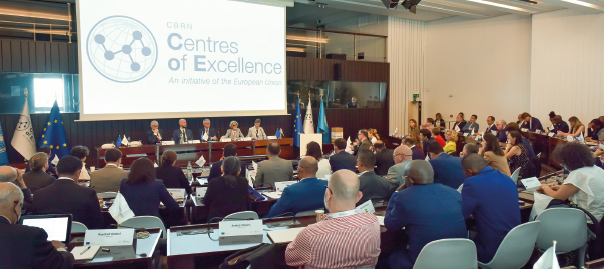
Interview with Natalie Pauwels, Head of Unit, European Commission Service for Foreign Policy Instruments, Brussels, and Marian de Bruijn, Programme Coordinator, United Nations Interregional Crime and Justice Research Institute (UNICRI), Turin   After a forced three-year break due to the Covid-19 pandemic, the 8th annual meeting of the National Focal Points (NFPs) of the European Union…